
The adjuster has a number. Your child is doing better. After weeks of appointments and phone calls, signing the paperwork sounds like a welcome finish.
But settling a child’s Alabama injury claim isn’t simply an adult settlement with a parent’s signature added. The approval process matters just as much as the offer.
We help families understand what they’re being asked to accept, what the agreement gives up, and how the child’s interests will be protected.
Have an offer for your injured child? Contact us for a free personal injury consultation or call (256) 770-7232 before signing.
Why a Parent’s Yes Isn’t the Whole Process
Parents make countless important decisions for their children. That doesn’t mean a parent’s signature alone creates the same binding injury settlement an adult could make personally.
In Large v. Hayes, the Alabama Supreme Court explained that approval of a minor’s settlement requires a hearing and a meaningful examination of the facts to determine the child’s best interests.
You may hear this called a pro ami hearing. The unfamiliar name can make it sound intimidating. Its purpose is practical: a judge independently evaluates the proposed resolution instead of simply accepting the adults’ agreement.
The court’s role isn’t to promise that the settlement is the largest amount anyone could imagine. It must consider whether the proposed outcome is appropriate for this child and this case.
A Big Offer Can Still Leave Important Questions
The headline number won’t tell you everything. Before deciding whether an offer makes sense, separate the child’s recovery picture from the payment paperwork.
Has treatment finished? Has a clinician explained whether another procedure or follow-up may be needed? Are school activities, sleep, or ordinary routines still affected?
A parent might see a healed cut while the child is still struggling with sensitivity or embarrassment. Another child may feel fine even though a follow-up appointment remains important. Neither situation should be reduced to a guess.
Tell the treating professionals what you’ve observed. Ask us how the available medical information affects settlement timing. We don’t replace a clinician’s judgment with an insurer’s request to close the file.
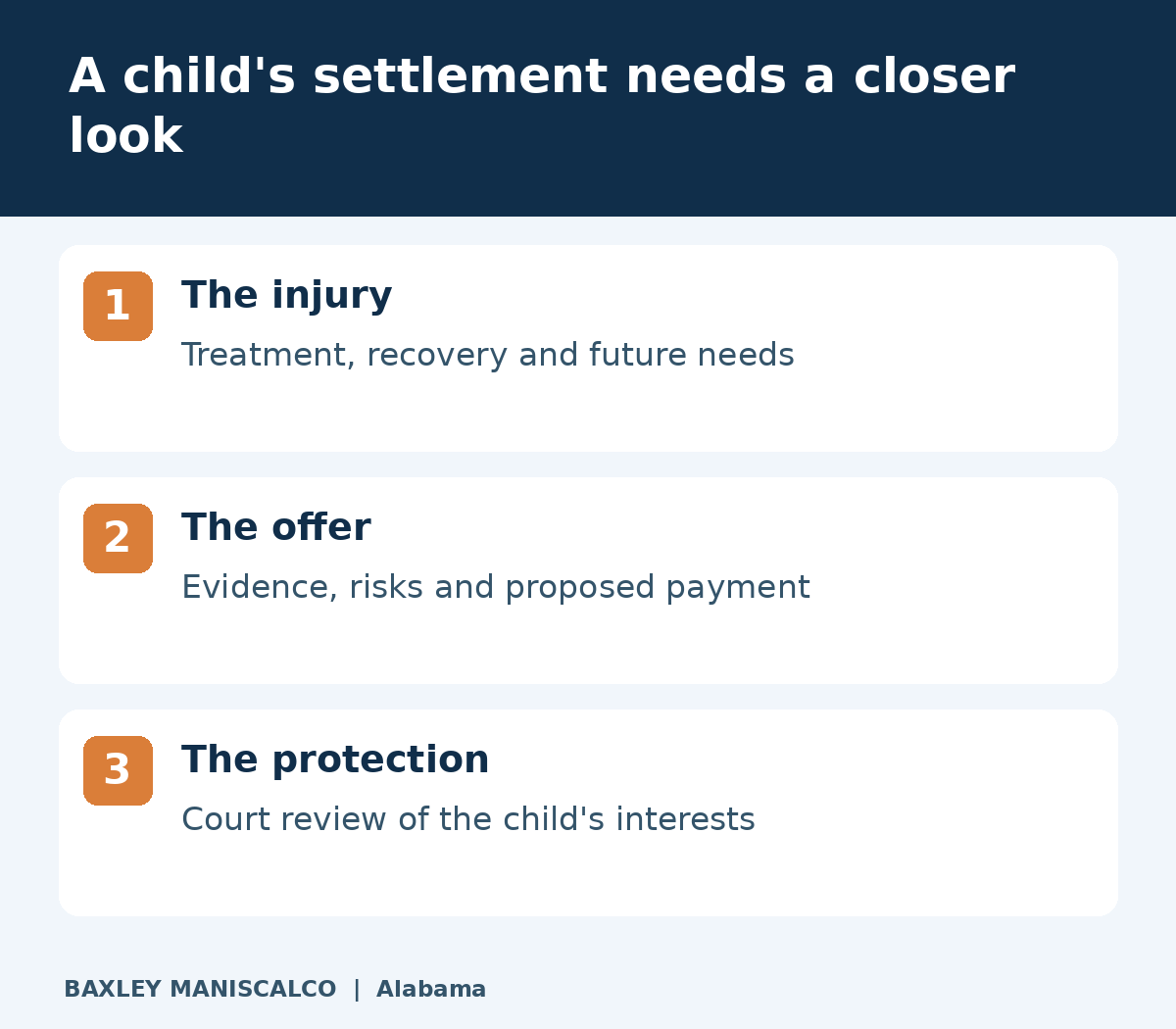
What Should You Bring to the Conversation?
You don’t need a perfect binder before calling. Start with the documents you already have and identify the missing pieces.
- The proposed agreement: Include every page, attachment, email and electronic acceptance screen.
- The treatment timeline: List visits, recommendations, prescriptions and upcoming appointments.
- The financial picture: Bring bills, insurance explanations and any reimbursement notices.
- The practical changes: Note missed school, activity restrictions and help the child has needed.
- The incident evidence: Preserve photographs, witness information and relevant reports.
Keep your notes factual. A dated description of what happened is more useful than a dramatic prediction about what might happen years from now.
If the injury occurred during the other parent’s time with the child, share the custody order too. We can examine the settlement issues alongside the concerns discussed in our guide to injuries during custody time.
Ask Where Every Dollar Is Going
An offered amount and the amount protected for the child can be different. Ask for a written accounting of proposed fees, expenses, bills, reimbursements and the child’s remaining proceeds.
Also ask what the proposed court order says about holding and distributing those proceeds. Depending on the case, the arrangement may involve restricted funds, a structured payment arrangement, a conservatorship, or another approved method.
Don’t assume the money can be placed in an ordinary household account and spent whenever a child-related expense comes up. The actual order and applicable requirements control access.
For a structured payment proposal, ask when payments begin, whether they can be changed, and what happens if needs arise earlier. A future payment schedule should be understandable before anyone agrees to it.
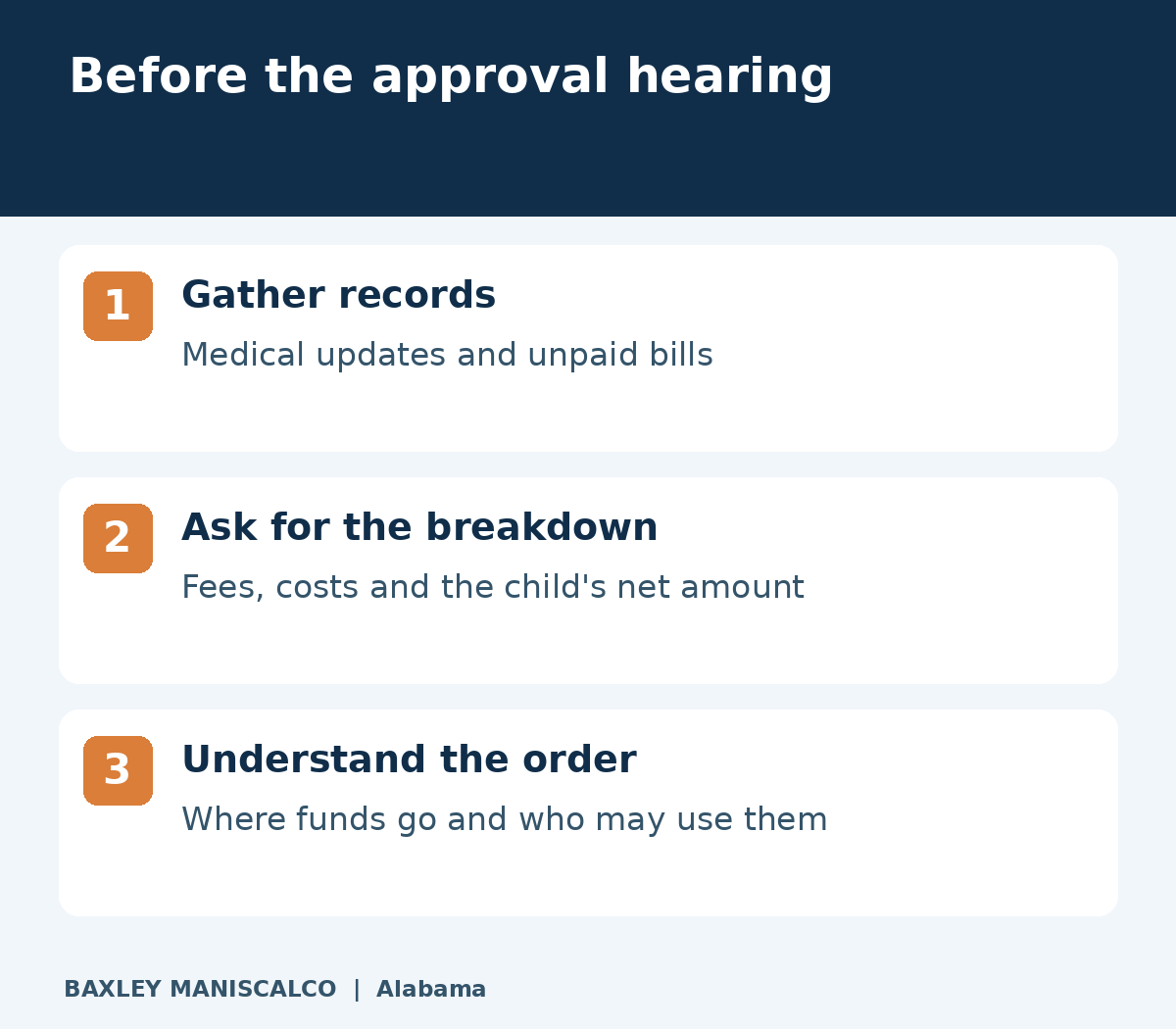
Court Approval Is a Decision, Not a Formality
Be ready to discuss the incident, the injury, the child’s recovery and the proposed terms. Your attorney can explain who needs to attend and what the particular court requires.
A guardian ad litem may be involved to represent the child’s interests. Ask about that person’s role and any associated cost rather than assuming everyone in the room performs the same job.
If something material changes before approval, speak up. A new treatment recommendation or a previously unknown bill deserves attention before the settlement becomes final.
Frequently Asked Questions
Do we need a hearing if everyone agrees?
Agreement alone doesn’t replace the judicial review needed for a binding minor settlement. We can explain how the approval process applies to your child’s claim.
Does court approval mean the case goes to trial?
Not necessarily. A settlement approval hearing reviews a proposed resolution. It isn’t the same as asking a jury to decide a contested injury trial.
Can we use the settlement to pay ordinary household bills?
Don’t assume so. Ask how the proceeds will be held and what the court order permits before making plans for the money.
Should we wait until every symptom disappears?
There’s no universal settlement date. The relevant question is whether the medical picture and future risks are understood well enough to evaluate the proposal responsibly.
What if my child turns 18 soon?
Don’t assume an approaching birthday eliminates the approval issue. Alabama generally sets the age of majority at 19, and the child’s legal status needs to be checked.
What if I’ve already signed something?
Send us the complete paperwork promptly. We need to review what was signed, what happened afterward, and whether a court entered an approval order.
Give the Finish Line the Attention It Deserves
An offer can be a useful step toward resolution without being ready for your signature today. You should understand both the proposed payment and the protections surrounding it.
We can help you ask the right questions and evaluate the next step in your child’s Alabama personal injury claim.
Before you sign, contact us or call (256) 770-7232.
Can't find what you're looking for? Search our site below.