
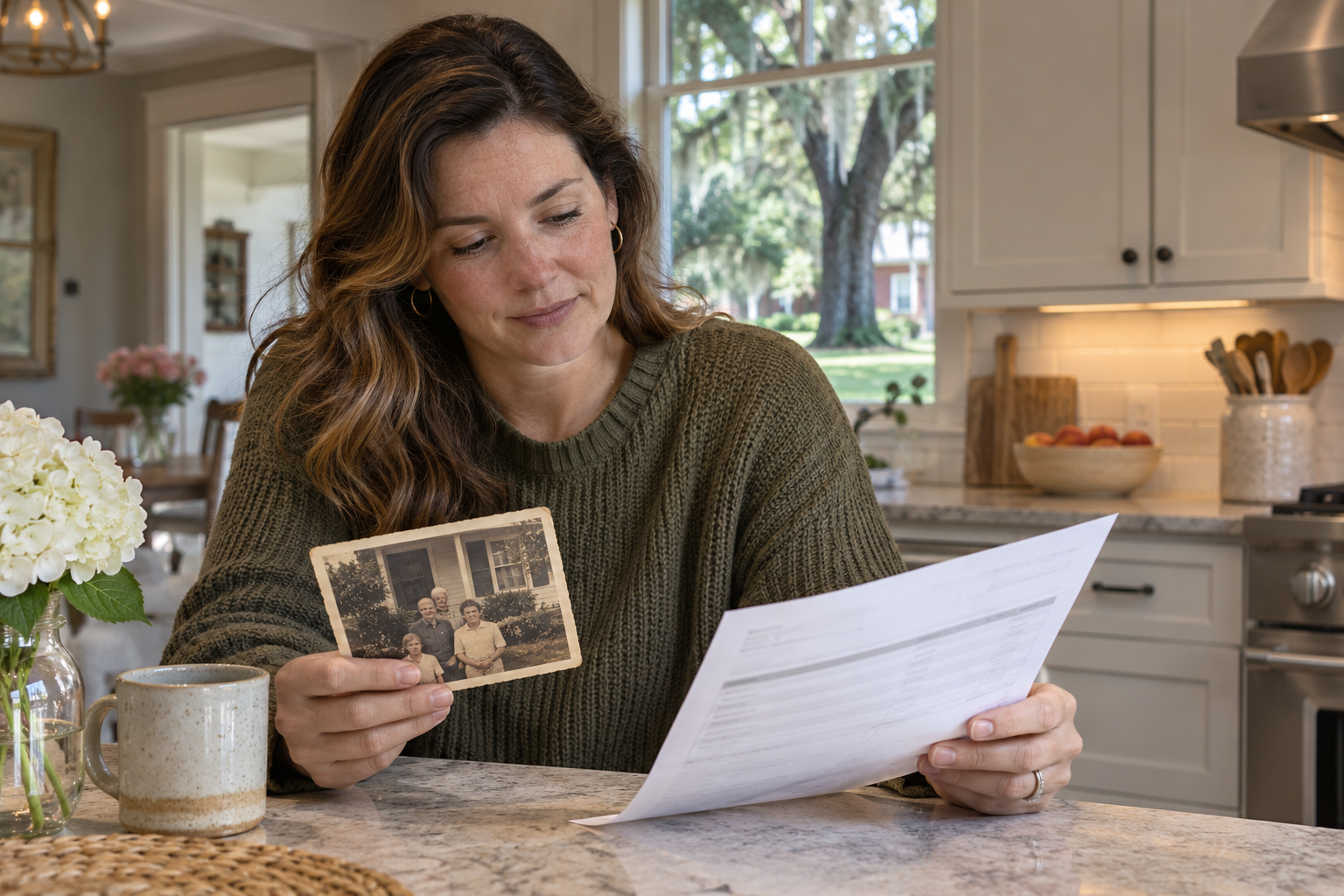
Your mom left you money. Some of it is still in savings. Some became the cabinets, countertops and plumbing in the kitchen where your family ate dinner for ten years. Now you’re getting divorced. Which part, exactly, are you being asked to split?
An inheritance isn’t automatically marital property in an Alabama divorce. The court looks at whether the inherited property, or income it produced, was used regularly for the couple’s common benefit during the marriage. Paying for work on the family home matters, but one invoice doesn’t automatically give your spouse half your account or guarantee you a refund at closing.
If you’re trying to follow money that went into your home years ago, talk with our family law team or call (256) 770-7232. You don’t need a perfect spreadsheet to start.
First, separate the kitchen from the bank account
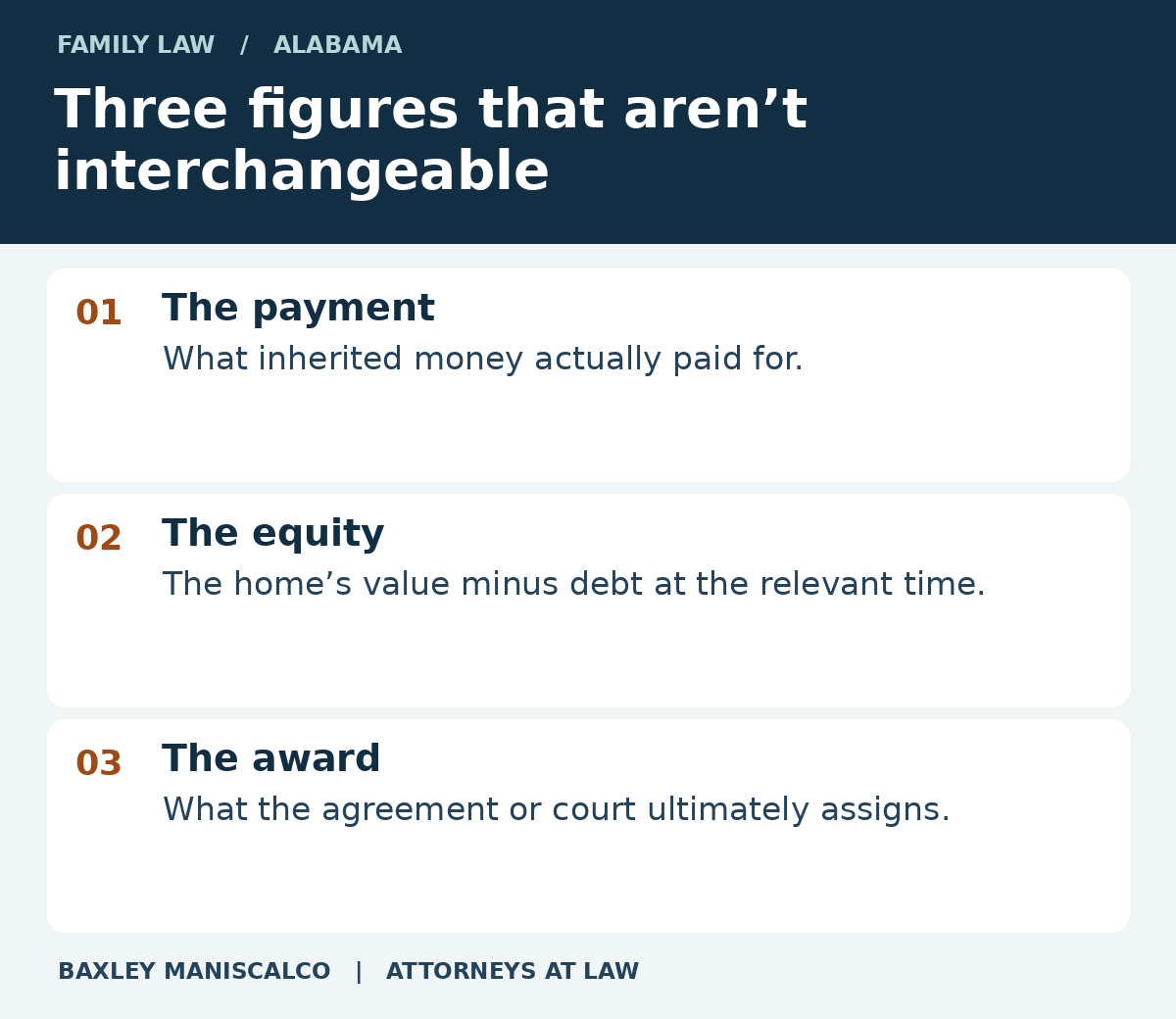
Suppose you inherited $80,000, spent $25,000 on a remodel and left the balance untouched. There are several things to identify: the money you received, the portion you spent, the account that remains and the house that was improved. They aren’t four names for the same asset.
The contractor has already been paid. There’s no envelope containing that $25,000 waiting to be handed back. The improvement might affect the home’s market value, but labor and materials don’t necessarily add dollar-for-dollar value. The mortgage balance also matters when you discuss equity. A receipt can establish a payment without establishing either today’s equity or your share of it.
Meanwhile, the remaining account has its own history. If it stayed separate and you can trace what’s in it, that’s different evidence from a checking account that received wages, paid the mortgage and funded vacations for years. A good discussion starts with both histories rather than a single label for everything.
What does “regularly used for the common benefit” mean?
Alabama Code § 30-2-51(a) sets out the rule for property acquired before marriage or by inheritance or gift. The inquiry includes the use of the property itself or the income it produced. That second part can matter even when every investment statement still bears only one spouse’s name.
Picture an inherited investment account. In one household, dividends stayed in the account and were reinvested. In another, dividends went to joint checking every quarter to meet family expenses. The original source looks identical on paper. What happened afterward gives the judge different facts to consider.
Even if regular family use is established, the statute doesn’t dictate an equal split. In Ex parte Drummond, the Alabama Supreme Court explained the discretion involved in considering inherited assets. That’s why neither “my name is on it” nor “our family benefited” ends the analysis.
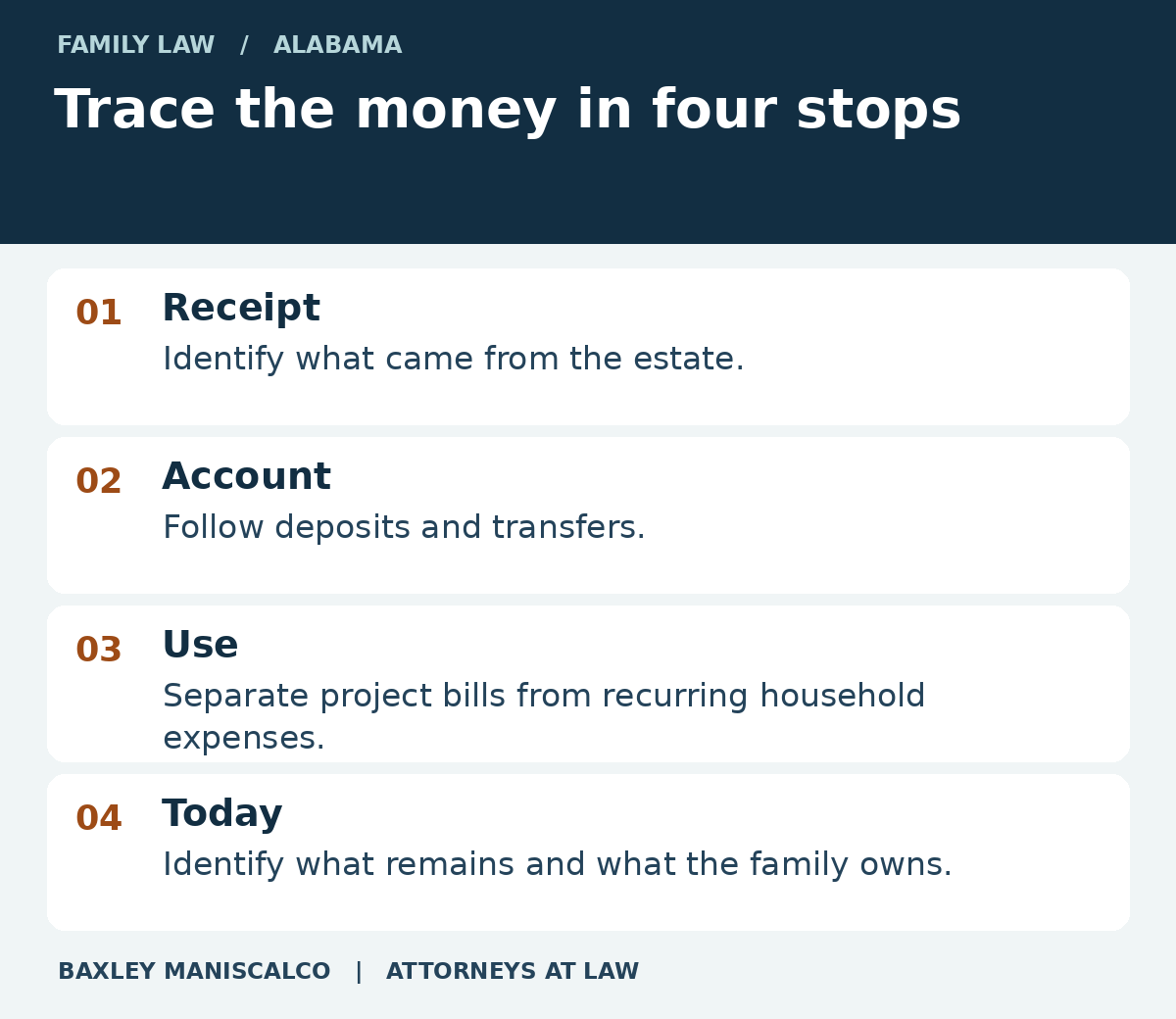
Trace a real payment from start to finish
You’re looking for a chain that somebody outside your household can follow. Start with one payment you remember well, perhaps the contractor’s deposit. Work backward to see where the money came from, then forward to what it purchased. Repeat that process for other significant transactions. Here’s what each record contributes:
- Estate or distribution paperwork helps identify the recipient, the property and the date of receipt. A will may describe an intended gift without proving the amount that ultimately arrived.
- The first account statement can connect the distribution to a specific deposit. If a check came in installments, list the dates separately instead of treating them as one lump sum.
- Statements around transfers show money leaving one account and reaching another. Keep the pages that identify the accounts, not just cropped screenshots of dollar amounts.
- Invoices and payment confirmations connect a withdrawal to work on the house. A contractor’s estimate shows a plan. A paid invoice or cleared check helps show what actually happened.
- Later statements and ownership documents help explain what remains. Bring current balances, the deed and mortgage information along with any earlier records showing a title change.
A missing statement isn’t a reason to give up or guess. Mark the gap and ask your bank how far back its archives go. Save records you can lawfully access. Don’t log into your spouse’s private account using an old password. If important material is unavailable, tell your lawyer what you believe exists and why it matters.
What if the money went through joint checking for one afternoon?
This is where the word “commingling” can cause more confusion than it clears up. Imagine the contractor required a cashier’s check. You moved money from your inheritance account to joint checking on Monday and paid the exact invoice on Tuesday. Compare that with years of inherited deposits mixed with wages and ordinary spending.
Both involve a joint account, but a dated transfer paired with a contractor receipt tells a more specific story. It doesn’t guarantee a legal result. It does give your lawyer something better to work with than “all the money was ours by then” or “none of it was ever ours.”
Write a short explanation beside each unusual transfer. Was it a bridge between accounts, a recurring contribution or a loan you believe the parties agreed to repay? If you say there was an agreement, preserve the signed document or contemporaneous messages. A personal expectation of repayment and an agreed repayment obligation are not interchangeable.
Prepare for the conversation about the house
One spouse may want to keep the property; the other may want it sold. Before discussing a buyout figure, ask what number you’re starting from. Is it last year’s tax assessment, an appraisal, an agent’s estimate or the original purchase price? Two people can argue over a fair percentage while using entirely different home values.
Keep the inheritance issue separate from the loan issue, too. An agreement giving one spouse the house doesn’t automatically release the other borrower. Our article on mortgage liability after an Alabama divorce explains why lender paperwork needs its own discussion.
If you’re considering a settlement, ask how the proposed agreement treats the remaining inherited account, the house and any claimed credit. Check the arithmetic for double counting. For example, a proposal that gives you a dollar credit for a remodel and also counts the spent money as cash still in savings starts from a balance sheet that doesn’t match reality.
Frequently asked questions
Is my spouse automatically entitled to half my inheritance?
No. The source of the asset, its use during the marriage, the evidence and the court’s discretion matter. Alabama’s rule isn’t an automatic fifty-fifty division of inherited funds.
Does one kitchen remodel count as regular use?
Don’t assume one expenditure settles the question in either direction. Its size, purpose and relationship to other uses matter. A lawyer will want the broader history, including how the home was owned and used.
Can I get the exact renovation cost back when we sell?
There’s no automatic dollar-for-dollar refund simply because inherited funds paid a bill. Trace the payment, establish current equity and review any agreement or order addressing proceeds.
What if I only used dividends for family bills?
Income from inherited property is part of the statutory inquiry. Bring statements showing what stayed invested, what was distributed and which bills the distributions paid.
What if my spouse did the renovation work?
Document the labor and materials separately. Photos, permits, invoices and dates can clarify what each spouse contributed without assuming an hourly rate or a specific legal entitlement.
Should I move the money to a new account before filing?
Get individual advice before transferring, concealing or spending disputed funds. Preserve the current statements and check any orders already in place. Moving money now won’t rewrite how it was used earlier.
Start with one invoice, not ten years of arguments
A family renovation can carry memories that never appear on a closing statement. For the legal conversation, start smaller: what came in, where it went and what still exists. Those answers can make the options easier to see.
If you’d like someone to walk through the records with you, contact Baxley Maniscalco or call (256) 770-7232. Bring what you have, even if it’s just the distribution letter and one paid bill.
Can't find what you're looking for? Search our site below.