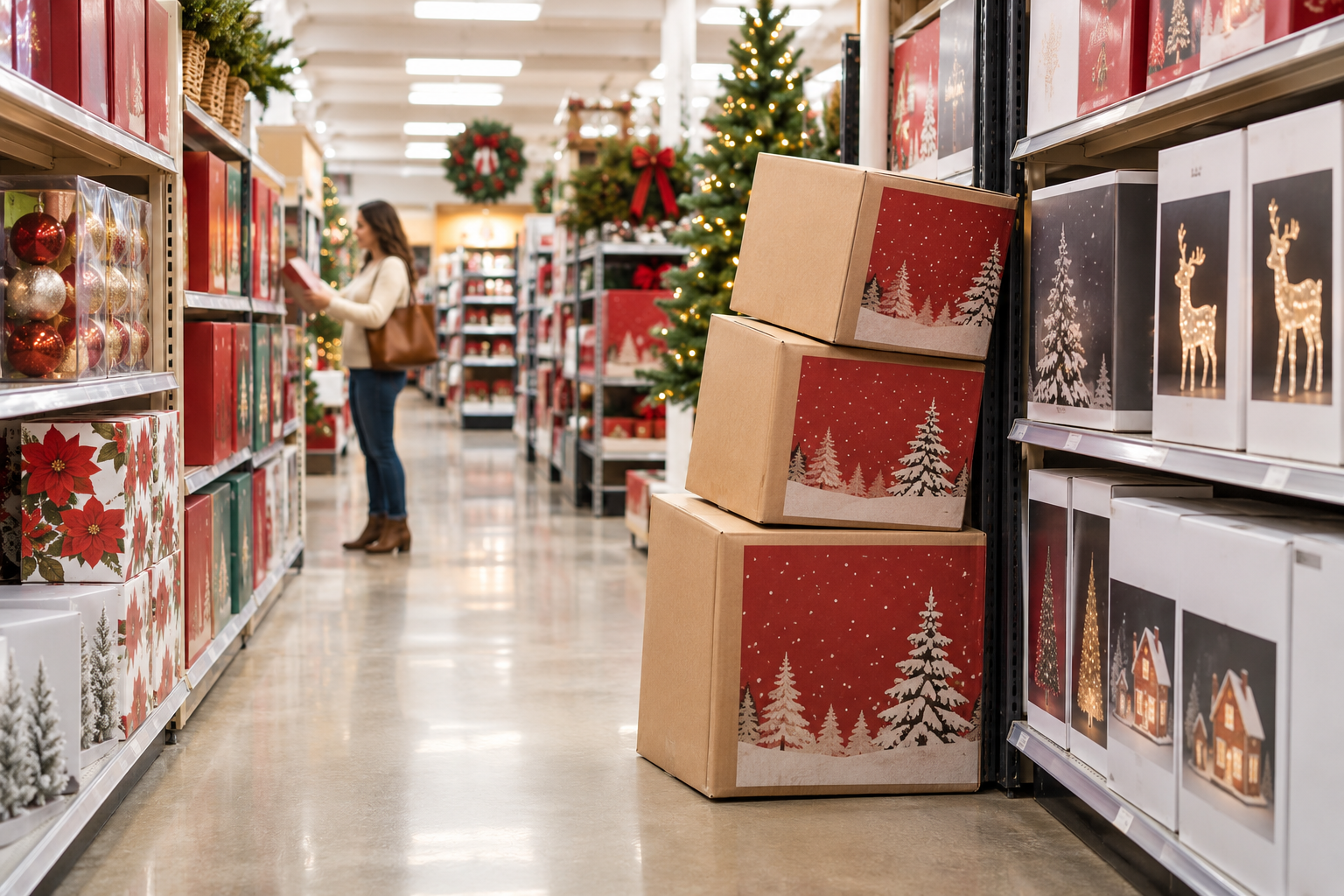
You’re looking for a gift, not watching the shelf above your head. A box shifts, a display tips, and suddenly the shopping trip becomes a medical visit.
When falling merchandise injures someone in an Alabama store, the store isn’t automatically liable. But “accidents happen” isn’t a complete answer, either. How the display was built, who handled it and what caused the object to fall can make a real difference.
We handle these questions through our Alabama personal injury practice. Holiday displays deserve the same careful fact review as any other potentially unsafe condition.
Hurt while shopping? Contact us for a free consultation or call (256) 770-7232. You don’t have to figure out the store’s responsibility on your own.
When Can a Store Be Liable for Falling Merchandise?
An injury claim generally needs evidence of a duty, a breach of that duty, causation and damages. For a customer invited to shop, the store must use reasonable care to provide reasonably safe premises.
That doesn’t make the store a guarantor that nobody will ever get hurt. The question is whether an unsafe condition or negligent conduct caused the injury.
In Norris v. Wal-Mart Stores, the Alabama Supreme Court considered a customer’s injury from a box falling from a high shelf. Evidence about the shelving and the absence of a protective railing supported sending the negligence question to a jury.
The decision doesn’t require every shelf to have a rail or guarantee recovery whenever a box falls. It shows why the physical arrangement deserves more attention than the store’s initial description of the event.
Who Built or Changed the Display?
A seasonal display can pass through several hands. Store employees might assemble it, a vendor might stock it, and shoppers might move items during the day.
Those possibilities create different evidence questions. A leaning stack constructed by an employee isn’t the same situation as a stable display abruptly knocked over by another customer.
In Wal-Mart Stores v. McClinton, the court explained that when the store or its employees create the dangerous condition, the customer need not separately prove actual or constructive notice of that hazard.
If someone else created it, proof that the store knew or should have discovered the condition may become central. Don’t assume the same notice analysis applies to every display, shelf defect or loose item.
Useful questions include:
- Who set it up? Identify the retailer, vendor or employee involved in stocking or assembling the display.
- What held it in place? Look for shelving, brackets, restraints, packaging and support beneath the item.
- What changed? Note recent restocking, missing lower boxes or contact from equipment or another shopper.
- What was visible? Record warning signs, barriers and the customer’s position before the incident.
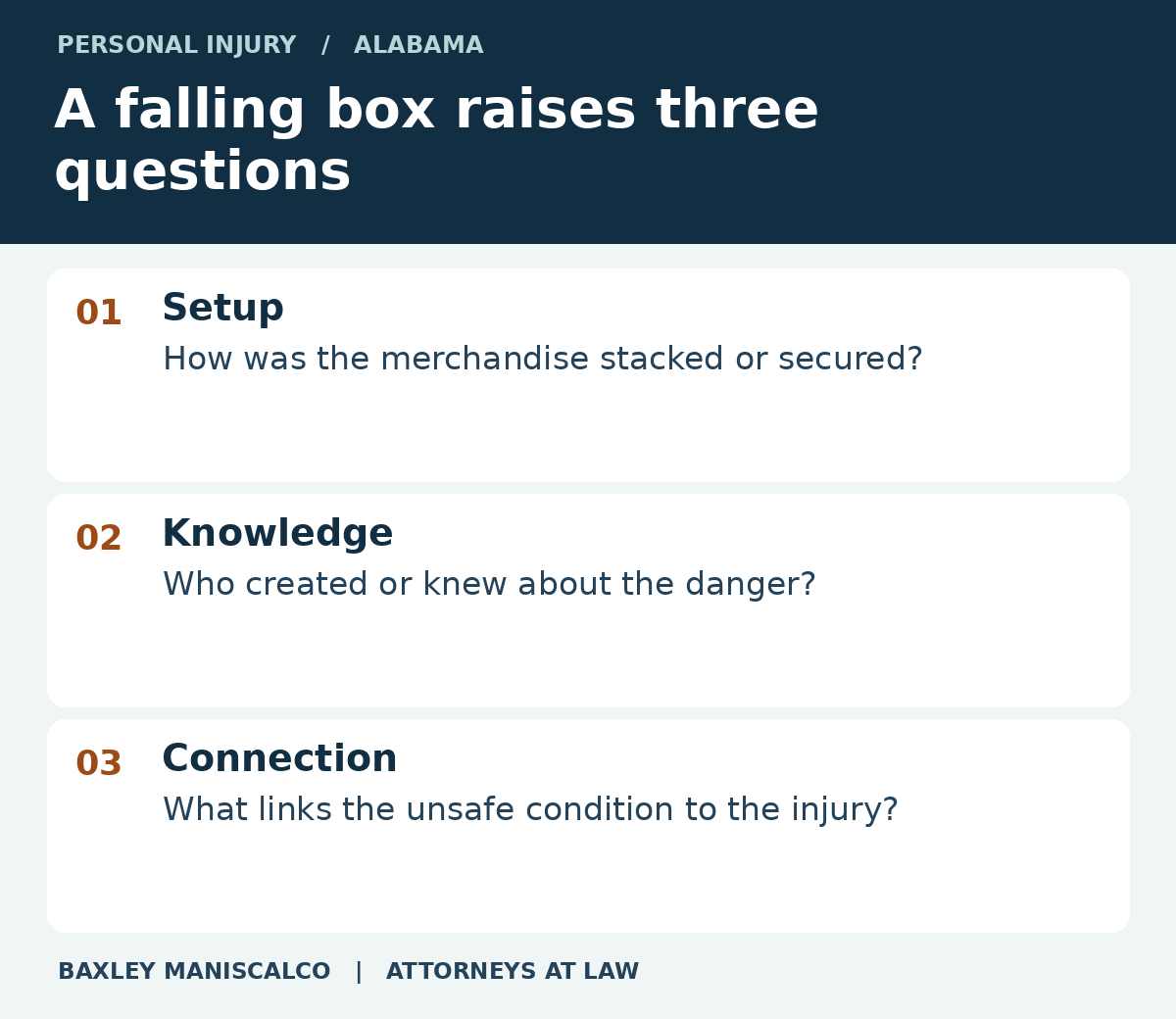
You don’t need those answers before calling us. They’re questions we use to decide what evidence should be requested and what explanations need testing.
What Should You Do Before the Aisle Changes?
Get medical help first. If you can’t safely document the scene, ask a companion to help without approaching an unstable display or interfering with staff.
A store may quickly remove boxes, close an aisle or rebuild the display. That can be sensible safety work while also changing what later photographs show.
If it’s safe, photograph the overall aisle, the shelf or fixture, the fallen object and the nearby warnings. Wider pictures can explain where the item came from better than a close-up of the box alone.
Preserve these details:
- The location and time: Save the store address, department, aisle and approximate minute of the incident.
- The item: Record packaging, product labels and identifying numbers without taking store property.
- The witnesses: Ask for names and contact details, including people who saw the display before it fell.
- The report: Ask the manager to document the incident and request a report or reference number.
- Your own records: Keep receipts, photographs, medical paperwork and a brief account written while events are fresh.
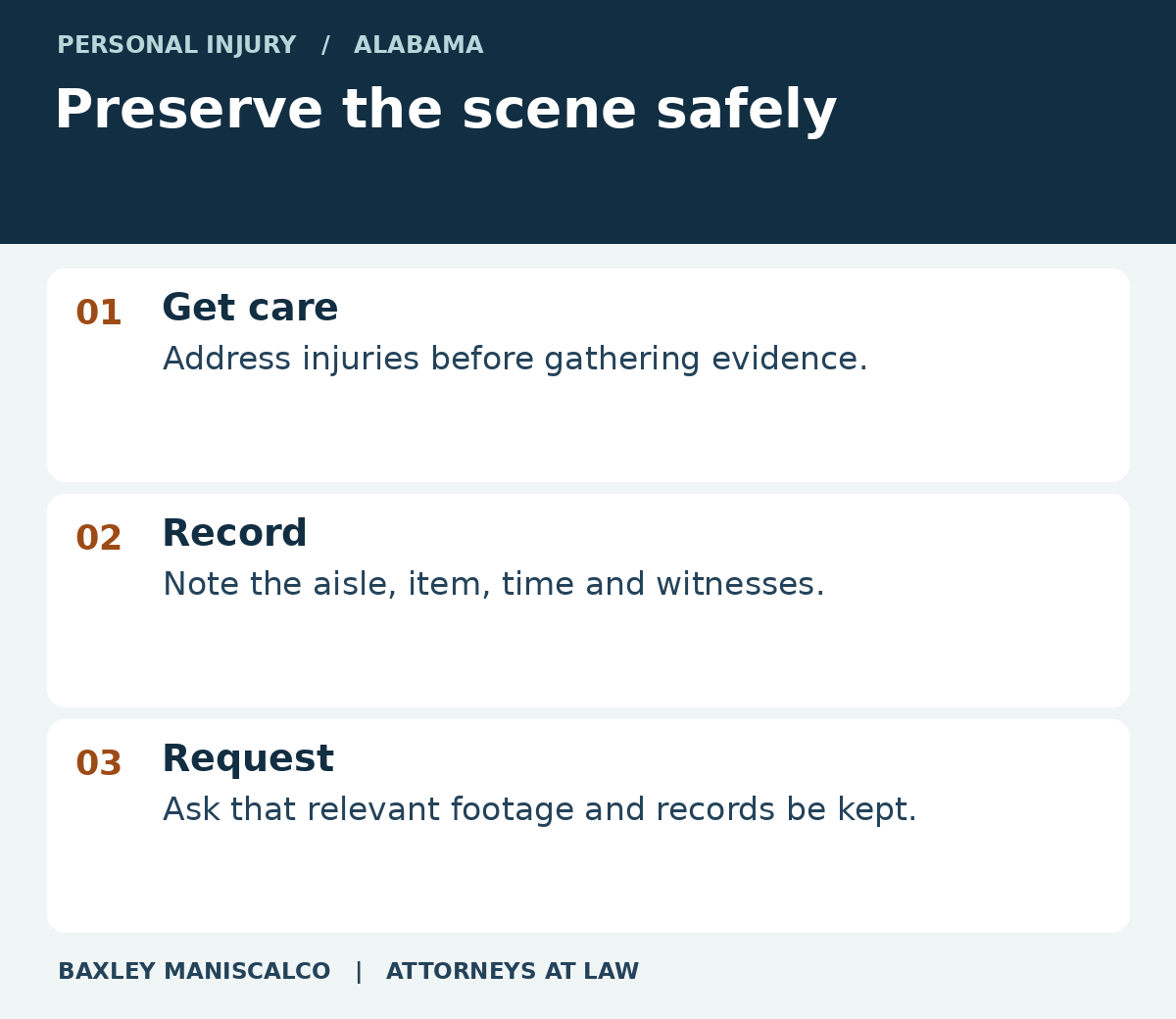
Describe what you actually observed. If you didn’t see who stacked the boxes, say so. An accurate gap in your knowledge is better than an assumption that later conflicts with video.
Ask About Video, but Preserve More Than Video
A camera may capture the impact without showing how the display became unstable. Another camera might show employees restocking it earlier. Inspection records or assembly instructions may answer questions the footage can’t.
Ask promptly that relevant recordings and records be preserved. Identify the location, date, approximate time and event, including the period before the injury when the display may have changed.
A request doesn’t guarantee that footage exists, that it will be provided voluntarily or that everything has been preserved. We can help identify the appropriate recipient and additional legal steps.
Our guide to surveillance footage in injury claims explains why the timing and scope of an evidence request matter. Don’t wait for an insurer to finish evaluating the claim before raising preservation concerns.
Keep original photographs and messages. Avoid editing the only copy, staging a reconstruction in the aisle or posting conclusions about fault online.
What If the Store Says You Should Have Seen the Danger?
Alabama premises cases can involve an open-and-obvious-danger defense. The visibility of the hazard and what a reasonable customer would have recognized matter; simply seeing merchandise isn’t always the same as recognizing the danger it presents.
The store may also argue that the customer’s own negligence contributed to the injury. Alabama’s contributory-negligence rule can bar an ordinary negligence claim when the required defense is established.
Those are reasons to investigate carefully, not reasons to accept a manager’s quick conclusion. Where you stood, what you touched, what was concealed and what employees instructed you to do may all matter.
Tell us the difficult facts, too. Reaching for a box or noticing a leaning display doesn’t mean we should guess the legal outcome without reviewing the full circumstances.
Frequently Asked Questions About Falling Merchandise Injuries
Is the Store Automatically Responsible If a Box Hits Me?
No. You still need evidence connecting an unsafe condition or negligent conduct to the injury. The fact that it happened inside the store is a starting point, not the entire claim. Setup, handling, notice and the surrounding circumstances need review.
What If Another Shopper Knocked the Display Over?
That changes the investigation. We would consider that person’s conduct, whether the display was already unsafe and whether the store had reason or time to address a hazard. Another customer’s involvement doesn’t automatically establish or eliminate the retailer’s liability.
Does Touching the Merchandise Ruin My Claim?
Not automatically. Handling products in an ordinary shopping manner differs from climbing shelving or disregarding a clear warning. What you did and how it contributed to the event matter. Describe your actions accurately so we can evaluate possible defenses.
Can I Get the Store’s Incident Report or Camera Recording?
You can request them, but the store may not voluntarily provide everything. Ask for a reference number and make a prompt preservation request. Formal legal procedures may be needed to obtain relevant materials. Keep your own evidence even while you’re waiting.
What If I Didn’t Buy Anything?
A completed purchase isn’t necessarily required to be a business invitee. Someone entering to browse merchandise offered for sale may still be a customer the store invited onto its premises. Your purpose and location inside the property remain relevant.
What Losses Can an Injury Claim Include?
Depending on the proof and applicable law, a claim may include medical expenses, lost income and pain or other effects of the injury. Save records showing the impact on your work and daily activities. Neither the store’s size nor holiday sales volume determines your compensation.
Let’s Look Beyond “It Was Just an Accident”
You shouldn’t have to reconstruct a store display while recovering from an injury. We can review what happened, identify potentially responsible parties and help you understand which evidence matters next.
Bring whatever you have, even if it’s only a photograph, receipt and the manager’s name. We’ll start there and explain the options in plain language.
If a shopping injury has interrupted your holiday plans, contact us for a free consultation or call (256) 770-7232. We’re ready to listen.
Can't find what you're looking for? Search our site below.