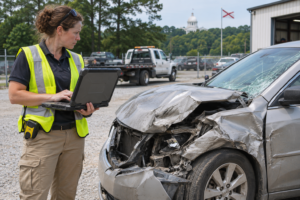
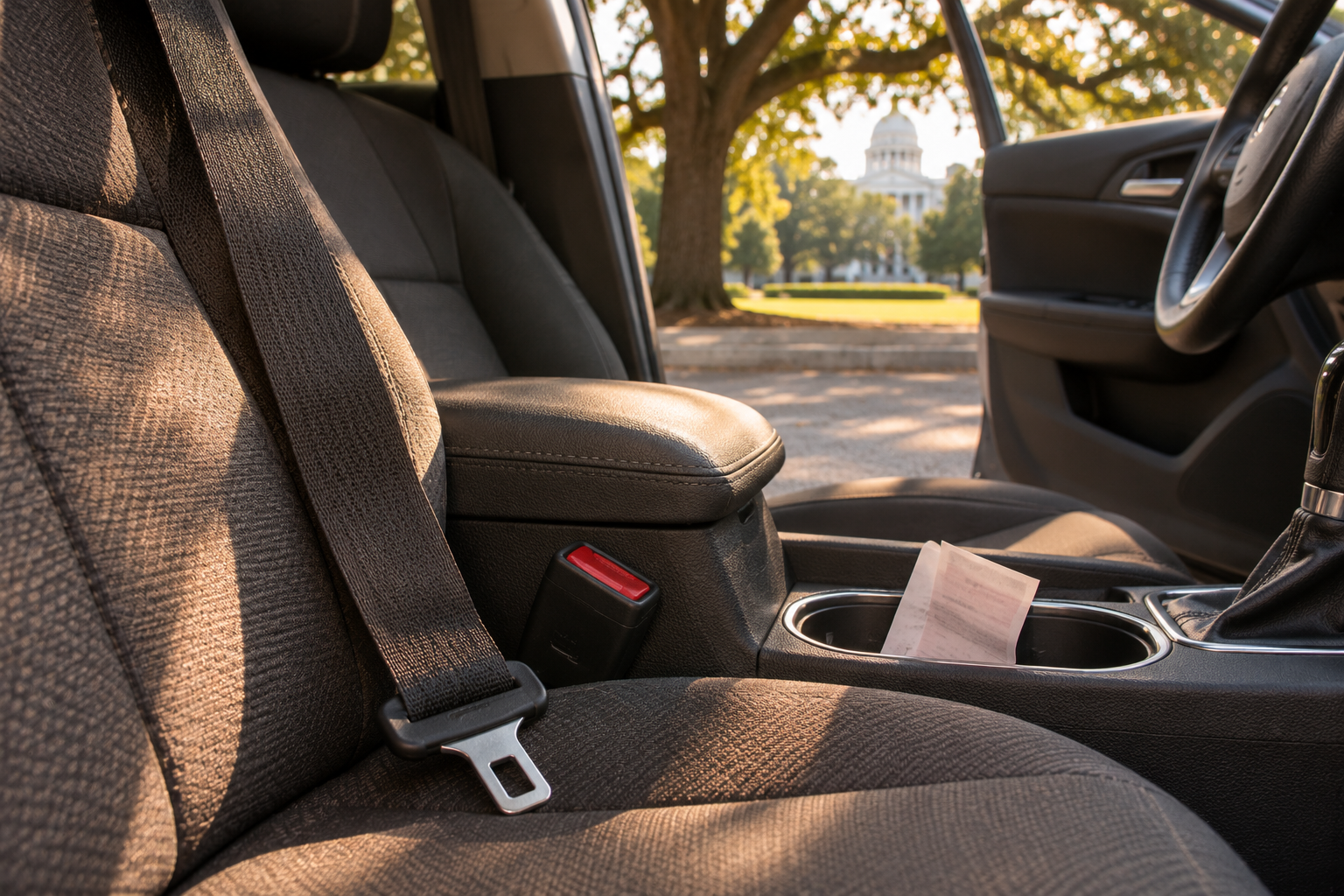
The other driver ran into your car. You left with an aching shoulder and a ticket for not wearing your seat belt. When the adjuster asks about the ticket before asking about the intersection, it’s easy to wonder which driver is actually under investigation.
The short answer: Under Alabama’s Safety Belt Act, failing to wear a belt in violation of the Act isn’t evidence of contributory negligence and doesn’t limit an insurer’s liability. The ticket alone doesn’t defeat your injury claim. You still need to show who caused the crash, how it hurt you and what losses followed.
Staring at a citation and a claim number? You’re welcome to talk it through with us or call (256) 770-7232 for a free personal injury consultation.
What the ticket says, and what it doesn’t
A seat belt citation addresses whether you complied with a traffic safety requirement. The Alabama Law Enforcement Agency’s seat belt guidance explains the restraint rule for occupants of passenger cars and its exceptions. Take the citation seriously, including any instructions and dates printed on it. Buckling up matters for your safety every time you ride.
The injury claim asks something different. Did the oncoming driver cross the center line? Did someone pull into your lane without room to make the turn? A notation about your belt doesn’t show where either vehicle was when the drivers first had a chance to avoid contact.
Alabama Code § 32-5B-7 is unusually direct on this point. It separates a violation of the seat belt requirement from the defense that your own negligence contributed to the injury. It also addresses insurer liability. That protection won’t establish fault for you, create coverage under a policy or put a dollar value on your claim.
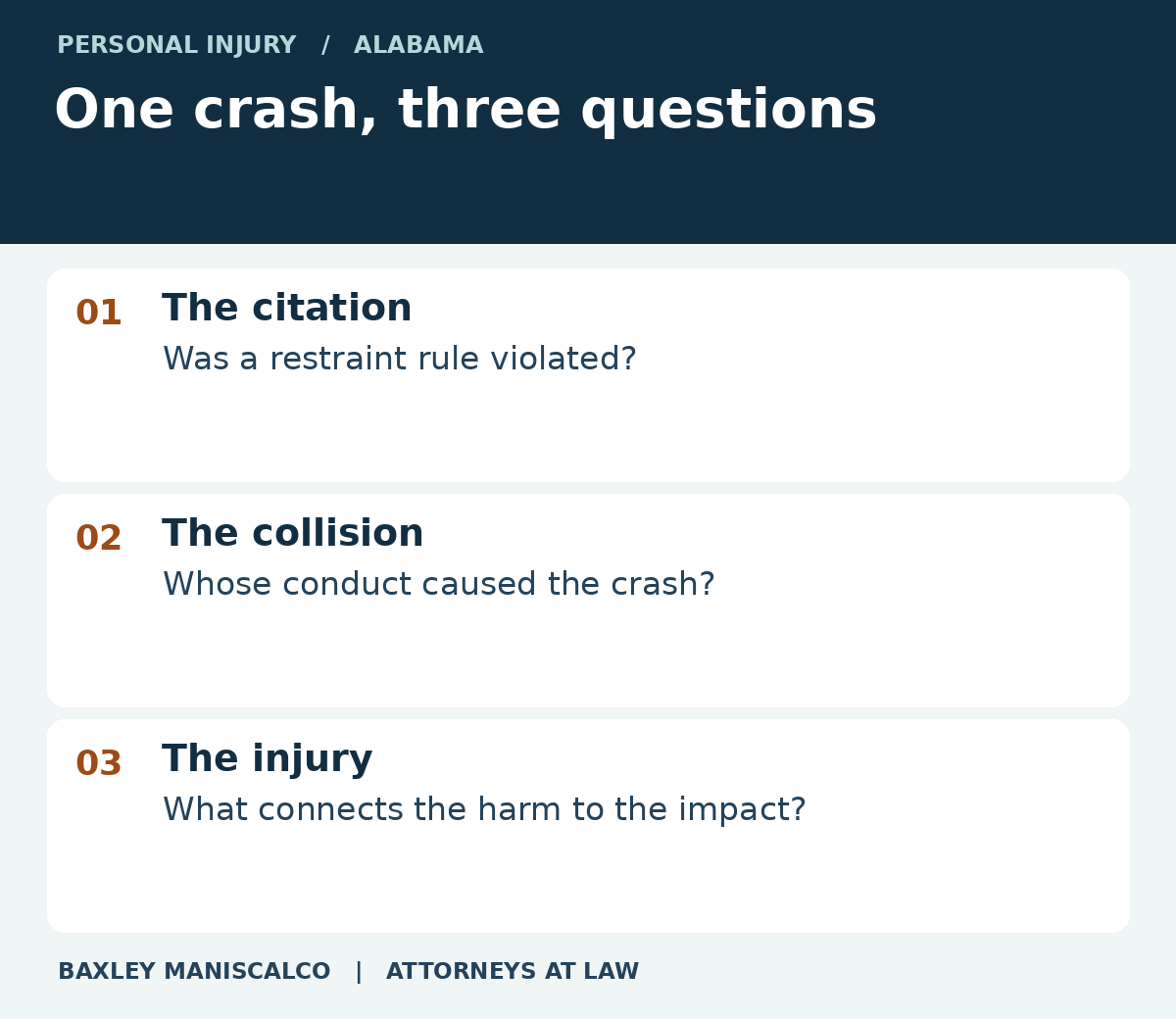
Picture the same ticket in two different crashes
Imagine you’re stopped at a red light. A car hits your rear bumper. A witness tells the officer you’d been stationary for several seconds, and a nearby business has video showing the light. The officer also determines you weren’t buckled. The witness and video help answer how the impact happened. The belt citation doesn’t contradict either one.
Now change just one detail: The other driver says you backed out of a parking space directly into traffic. Whether you moved, how far you could see and when the other car appeared are real disputes. The seat belt rule doesn’t settle them in either driver’s favor. A photograph of the parking layout could matter far more than a long argument about the ticket.
That distinction is especially useful in Alabama, where contributory negligence can be a serious defense to an ordinary negligence claim. If the insurer says you contributed, ask which action it means. “You weren’t buckled” and “you failed to yield” are different allegations. Our guide to claims involving disputed fault explains why getting that distinction right matters.
Read the crash report like a record of sources
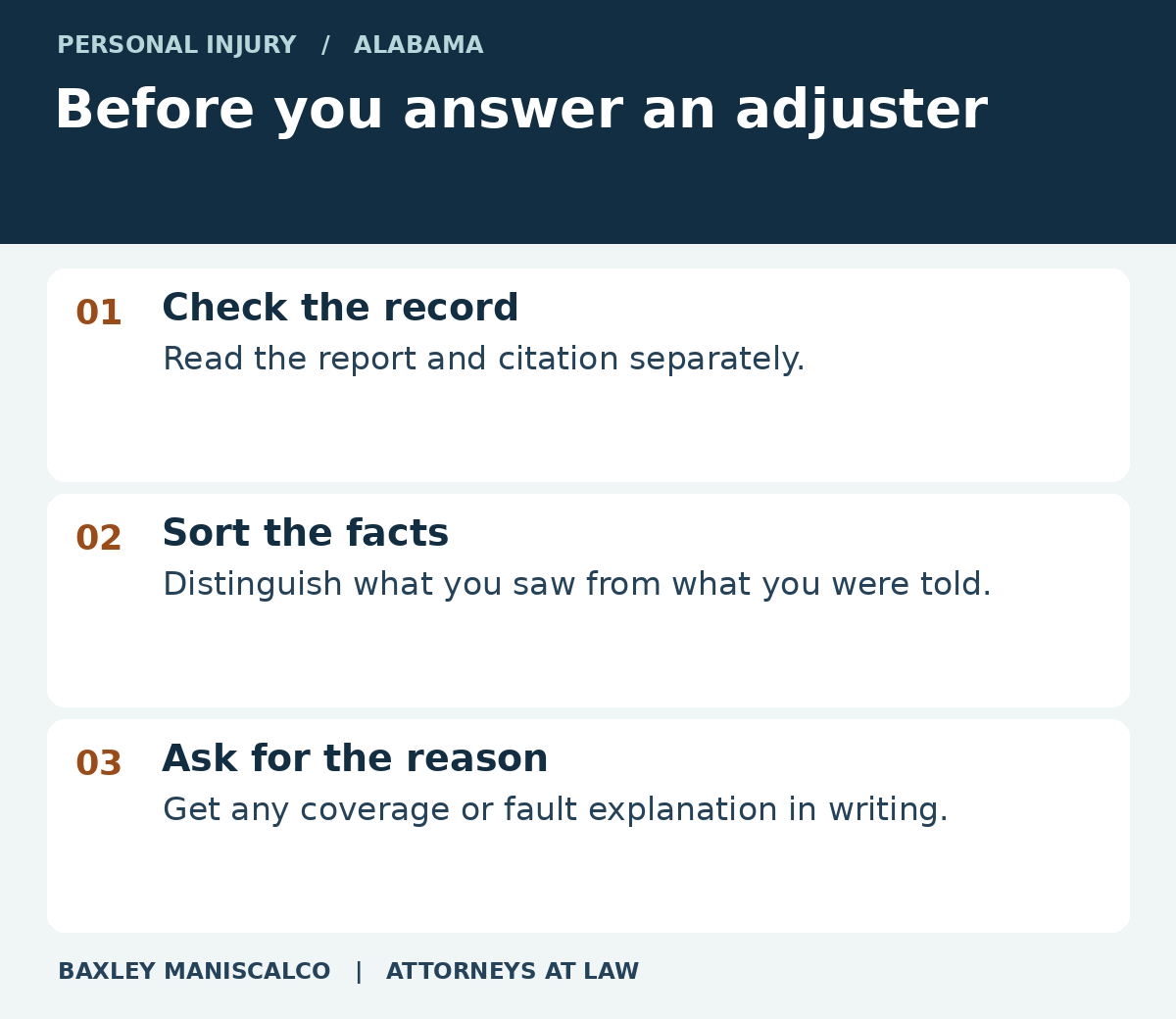
Pull out the report and find the sentence that worries you. Is it the officer’s own observation, a statement attributed to a driver, a diagram or a checked box? An officer who arrived after impact could see the cars’ final positions without having witnessed either car approach. Your report is most useful when you know who supplied each piece of information.
- Keep the original. Save the whole report, not just the page with the diagram. Put the citation in a separate file so the two documents don’t become interchangeable in later conversations.
- Flag a specific discrepancy. If the diagram swaps the cars or attributes a statement to the wrong person, write down exactly what you believe is wrong and why. Ask the reporting agency about its correction process.
- Preserve independent evidence. Note witnesses’ names, nearby cameras and any photos already on your phone. Keep original recordings intact. Don’t edit or post them to make your point.
- Separate memory from reconstruction. “I remember waiting at the light” is your recollection. “My passenger thinks the other driver was looking down” is someone else’s observation. Tell your attorney which is which.
If you don’t know how to obtain the report, start with our Alabama crash report guide. Don’t wait for it to arrive before seeking needed care or preserving evidence that might disappear.
What to say when the adjuster asks about your belt
You don’t have to choose between honesty and protecting your claim. Answer accurately if you know. If the first thing you remember is standing outside the car, say what you remember. Don’t fill a gap by adopting somebody else’s theory, and don’t decide you must have been buckled simply because you usually are.
If an adjuster says the ticket means the company can’t pay, ask for the explanation in writing. Which claim is the company addressing? Is it disputing the other driver’s conduct, the connection between the crash and your treatment, or a particular policy provision? Keep the correspondence with the claim number and the adjuster’s contact information.
An inquiry from your own insurer may carry obligations under your policy. Forward it promptly for review, including any deadline. There’s a difference between taking time to understand a request and ignoring it. Neither the other driver’s insurer nor your own adjuster is the person to ask for independent legal advice about your rights.
The medical evidence still has a job to do
Suppose the driver accepts responsibility, but the insurer disputes the shoulder treatment. Your belt ticket won’t answer whether your shoulder hurt before the wreck, what changed afterward or why a clinician recommended therapy. A prior medical note, your first post-crash visit and a therapist’s measurements may tell that story together.
Describe what you actually feel and what tasks have changed. If you could previously lift a bag onto a shelf and now need help, that’s more informative than announcing you’ve lost a percentage of your strength. Let the clinician make the medical assessment. Keep appointment dates and work restrictions so you don’t have to reconstruct them months later.
A different issue arises if you believe the belt or buckle malfunctioned. Preserve the vehicle and restraint information promptly and get advice before repairs or disposal. A claim about a defective restraint asks different questions from an ordinary claim against a careless driver. General Motors Corp. v. Saint illustrates why lawyers distinguish belt nonuse from allegations about how a safety device was used.
Frequently asked questions
Is a seat belt ticket the same as being found at fault for the crash?
No. It addresses a restraint violation. Evidence about the drivers, roadway and impact is still needed to evaluate who caused the collision.
What if I was riding in the back seat?
Don’t assume rear seats are exempt. Alabama’s passenger-car rule generally covers occupants in the back, too. The circumstances of a citation are a separate issue from proving your injury claim.
Should I tell my doctor if I wasn’t wearing one?
Yes, give the care team an accurate history, including what you remember hitting. If you don’t remember a detail, say so. Your priority in that conversation is getting appropriate care.
What if the report lists belt use as unknown?
Unknown is not a finding that you weren’t buckled. Keep the report as written, identify any witness with firsthand knowledge and avoid converting uncertainty into a definite statement.
Does this mean insurance has to pay my bills?
No. The statute doesn’t guarantee payment or erase other defenses, policy terms or disputes over medical causation. It addresses what a seat belt violation itself can establish.
What should I bring to a consultation?
The report, ticket, available photos and anything the adjuster sent are a useful start. If something is missing, bring what you have. Knowing what to request next is part of the conversation.
Start with what actually happened
A citation can make you feel like the case has already been decided. It hasn’t. We can look at the ticket alongside the collision evidence and the treatment records, then explain which questions deserve your attention.
If you’re unsure where to start, send our Alabama car accident team a note or call (256) 770-7232. We’ll listen, and your personal injury consultation is free.
Can't find what you're looking for? Search our site below.