

You moved out. Your ex kept the house. The divorce paperwork says they’re responsible for the mortgage. Then a late-payment notice arrives with your name on it.
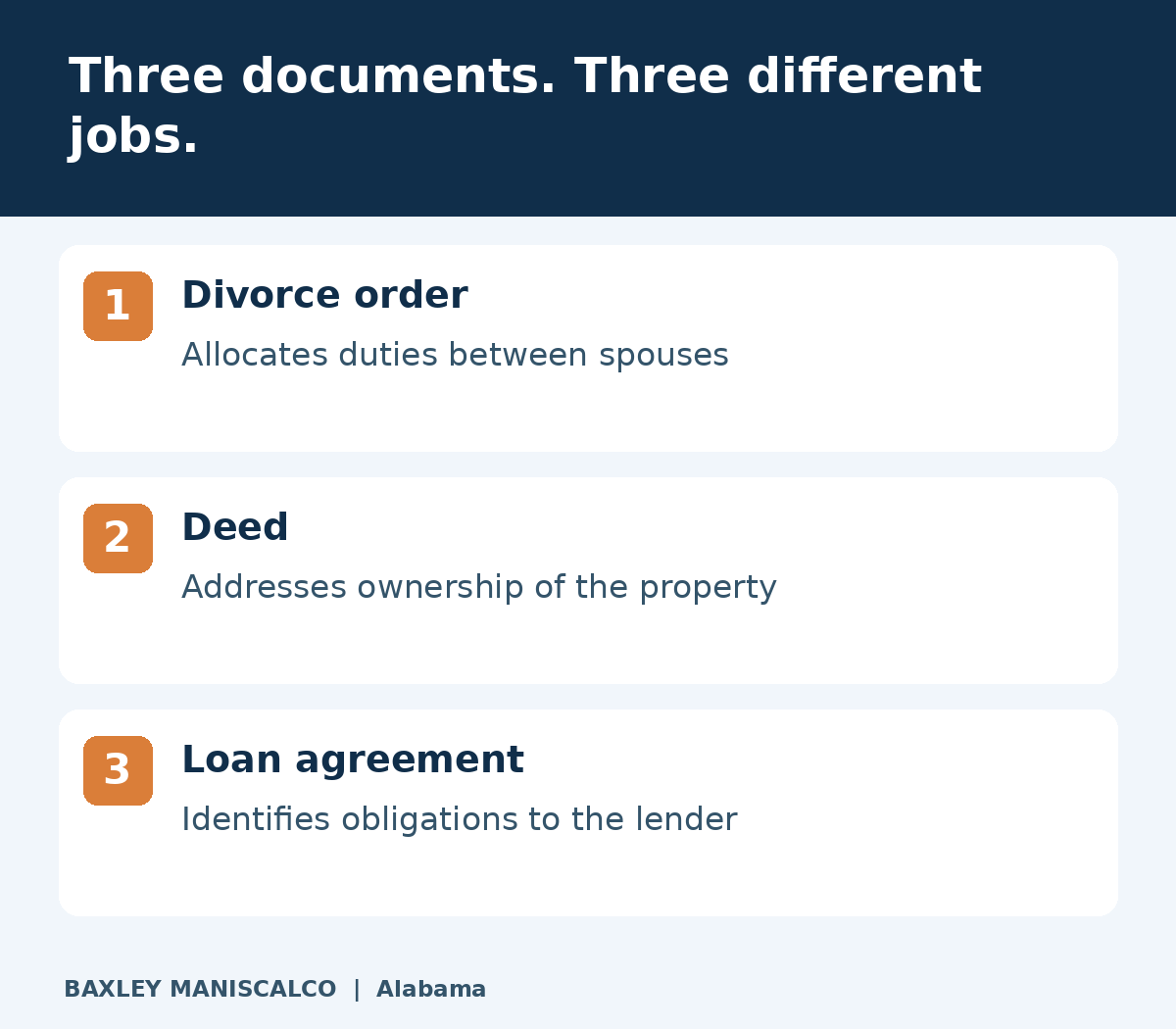
It’s a frustrating surprise, but the divorce order and the loan agreement do different jobs. A promise between former spouses doesn’t automatically release a borrower from the lender’s contract.
We help people address that gap before it becomes a credit problem or another court dispute.
Unsure whether your house agreement protects you? Contact us about your Alabama divorce or call (256) 770-7232.
The Divorce Order Doesn’t Rewrite the Loan
The Consumer Financial Protection Bureau explains that assigning debt to one spouse doesn’t, by itself, change a creditor’s ability to collect from a borrower who remains legally responsible.
That means two questions can have different answers: who must pay under the divorce order, and who still owes the lender under the loan documents?
A provision requiring your ex to protect you from the debt may give you rights against your ex. It doesn’t necessarily prevent the lender from contacting you or a missed payment from affecting your credit.
Start by locating the actual note and current loan statement. Knowing whose name appears on a bill isn’t always the same as knowing who signed the obligation.
Signing the Deed Isn’t the Same as Leaving the Mortgage
A deed concerns ownership. A mortgage loan involves repayment obligations and security rights. Transferring your ownership interest doesn’t automatically remove your name from the debt.
This is why a quick promise to ‘sign the house over’ needs more detail. What will happen to the loan? When will it happen? What written evidence will show that the departing borrower has been released?
Coordinate any deed transfer with legal advice and the actual financing plan. Don’t use a general online form as a substitute for understanding the full transaction.
Our article on the family home during an Alabama divorce addresses the ownership decision. The question here is what must happen afterward to carry that decision out.
Refinancing Is One Route, but Ask About Assumption Too
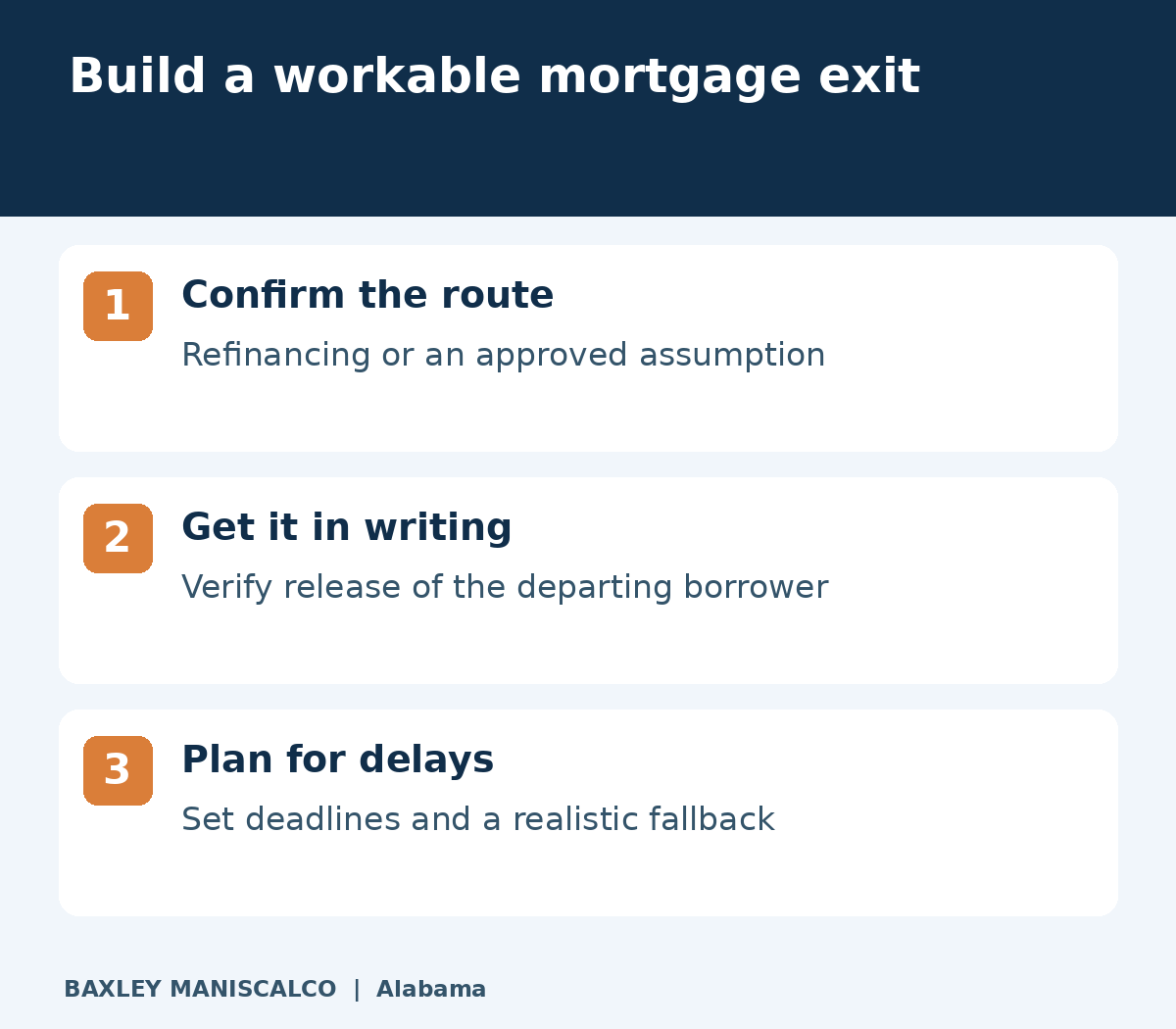
Refinancing replaces the existing loan with a new one. Whether that works depends on qualification, costs, interest rates and the amount that needs to be financed.
An assumption may be another possibility under the loan’s rules. But don’t treat permission to make payments, a transfer of ownership, an assumption, and release of the original borrower as interchangeable.
The CFPB has documented mortgage-servicing problems after divorce, including difficulties obtaining a borrower’s release. Ask the servicer what your specific loan permits and which documents it requires.
Get the answer in writing. A phone representative saying ‘that should be fine’ isn’t the same as completed paperwork releasing you from liability.
Keep a record of submission dates, reference numbers, document requests and responses. If the process stalls, that timeline helps explain whether the obstacle is missing information, an underwriting decision, or something else.
A Deadline Needs a Backup Plan
Imagine an agreement that says one spouse will refinance ‘as soon as possible.’ Months pass, the application fails, and each person has a different idea of what happens next.
A useful discussion before signing includes both the preferred result and a realistic fallback. The right terms depend on the case; they shouldn’t be improvised after a payment is missed.
- A defined timetable: When must an application be made and the loan issue resolved?
- Progress information: What documents will demonstrate applications, decisions and completion?
- Interim responsibility: Who handles payments, insurance, taxes and repairs while the process continues?
- A fallback: What happens if refinancing or a required release can’t be obtained?
- Sale details, if relevant: How would listing, price decisions and expenses be handled?
We’re not suggesting every family needs the same agreement. We’re suggesting that a financial transition needs terms people can actually follow.
What If the Payment Is Already Late?
Get the current account information and speak with your divorce attorney promptly. Preserve the notice and the order rather than relying on a verbal explanation from your ex.
Check your credit reports for accuracy. If you find an error, identify the specific problem; a valid report of a joint debt isn’t automatically an error because the divorce assigned payment to someone else.
Ask about available remedies under the order and the facts. Don’t respond by withholding child support, ignoring another court obligation, or signing away additional rights without advice.
Frequently Asked Questions
Does a quitclaim deed remove me from the mortgage?
No, not by itself. A deed transfers an ownership interest; release from the loan requires a separate legal and contractual basis.
Can I send the lender my divorce decree and be done?
Sending it may be part of the process, but it doesn’t automatically release a borrower. Ask for written confirmation of your actual loan status.
Must my ex always refinance?
Not necessarily. The order, loan terms and available assumption or release procedures need review. Don’t assume refinancing is the only possible route.
Is an indemnity clause enough?
It can address responsibilities between former spouses, but it doesn’t itself bind a lender to release a borrower. The financing steps still matter.
What if my ex can’t qualify?
Review the order’s deadlines and fallback provisions with counsel. Difficulty qualifying doesn’t automatically change the order or remove your loan liability.
Can we fix vague language after the divorce?
Possibly, but the available remedy depends on the order and procedural rules. Get advice promptly rather than assuming a final property arrangement can freely be rewritten.
Finish the Financial Separation
Being finished with the house emotionally isn’t the same as being finished with the mortgage contract. We can help you identify the documents, deadlines and unresolved obligations that need attention.
Have a decree, a loan statement and unanswered questions? Contact us or call (256) 770-7232.
Can't find what you're looking for? Search our site below.