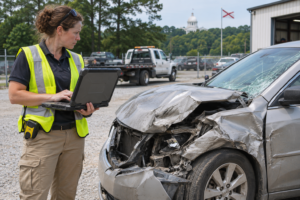

A rental-car driver runs a red light and hits you. The crash report names a national rental company as the vehicle’s owner. It’s natural to assume that company will pay.
Then the rental company points to the driver, and the driver points to an insurance policy. Meanwhile, you’re trying to arrange treatment and figure out where to send your claim.
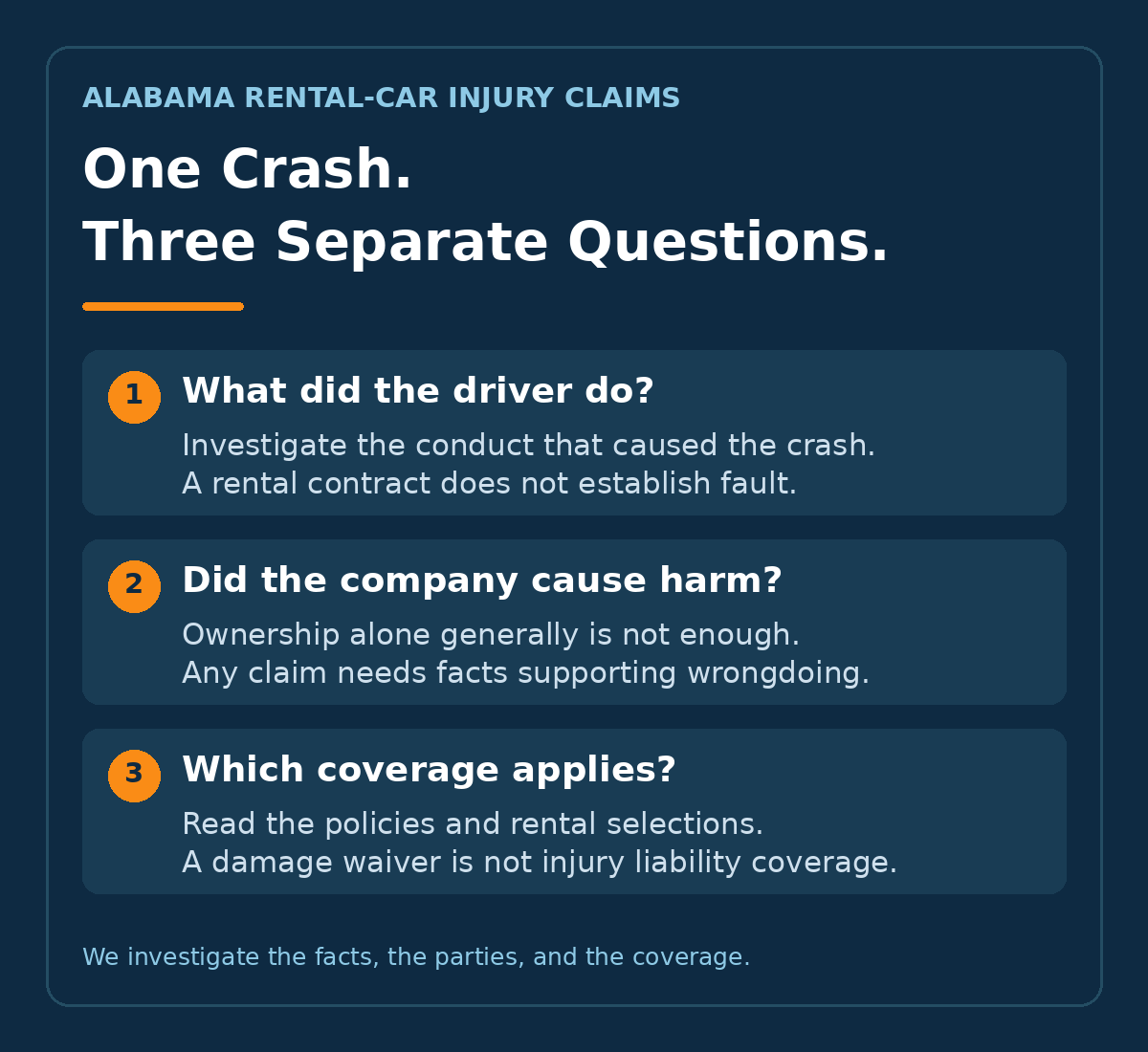
Ownership, fault, and insurance are different questions. Sorting them out early can help you pursue the right parties without overlooking an available source of coverage.
Our Alabama car accident team investigates who caused the collision and how it happened.
We also handle the broader personal injury claim, including medical evidence, missed work, and the effect of an injury on daily life.
Injured in a rental-car crash? Contact us for a free personal injury consultation or call (256) 770-7232.
Start With the Driver’s Conduct
The first question is what caused the collision. Renting a vehicle doesn’t excuse speeding, failing to yield, distracted driving, or other negligent conduct.
We look for evidence connecting the driver’s actions to your injuries. A rental agreement can identify the vehicle and renter, but it doesn’t prove how the crash happened.
Save the crash-report number, photographs, witness information, and any available video. Write down what you remember while the details are fresh.
Tell your treating providers how the collision occurred and describe your symptoms accurately. Keep appointment records and documentation of work you miss.
The driver’s responsibility should be investigated even if the rental company says it has no liability. Those are separate issues.
Why Vehicle Ownership Usually Isn’t Enough
A federal law called the Graves Amendment limits claims based only on a rental company’s ownership of a vehicle.
The protection applies when the owner is in the business of renting or leasing vehicles and there’s no negligence or criminal wrongdoing by the owner or its affiliate.
In practical terms, a rental company generally isn’t responsible merely because its customer caused a crash in its car.
The statute doesn’t erase a claim against the driver. It also preserves specified state financial-responsibility and insurance requirements.
A claim based on the company’s own conduct requires a separate analysis. The facts must support a legally recognized claim, not simply a different label for ownership liability.
That distinction matters before filing suit. Naming a familiar company without supporting evidence can add delay while the actual claim still needs attention.
What We Need Beyond the Crash Report
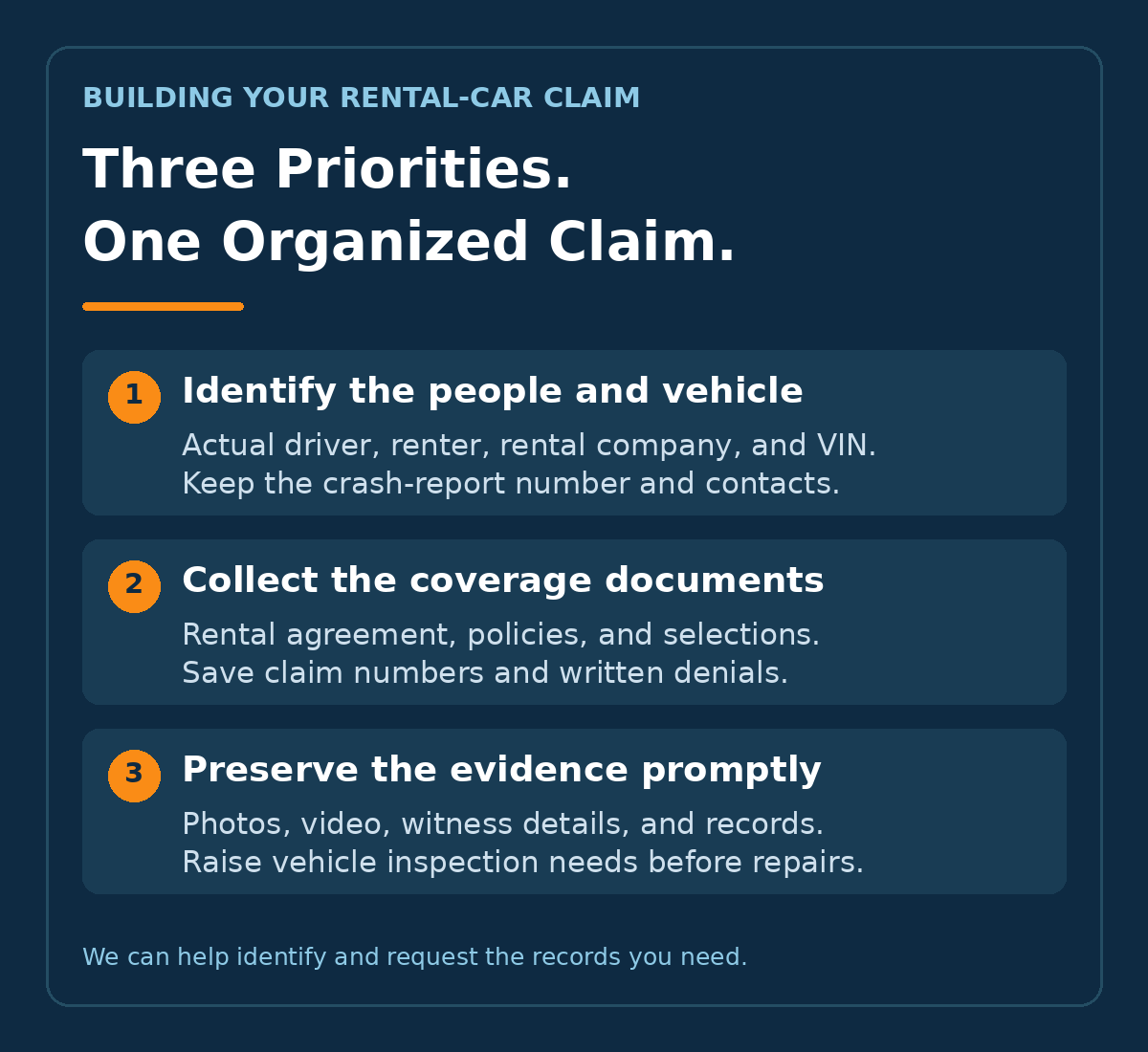
The rental paperwork often sits with the driver or company. We identify the records to request and the evidence that may need prompt preservation:
- Rental agreement: The full contract, pickup and return dates, named renter, authorized drivers, and branch information.
- Coverage documents: Personal auto policies, rental-counter selections, certificates, endorsements, and written coverage decisions.
- Vehicle identity: The VIN, license plate, owner’s legal name, and any fleet or rental identification number.
- Condition records: Inspection, maintenance, repair, complaint, and recall records when a vehicle problem may have contributed.
- Crash evidence: Photographs, witness details, video, vehicle data where available, and the locations of the damaged vehicles.
Preservation requests should identify relevant records and vehicles before routine repairs, disposal, or data deletion can affect the evidence.
You don’t need to obtain everything yourself. Tell us what you have, what you’ve been told, and who currently has the vehicle.
When the Rental Company’s Own Negligence Matters
Suppose a renter reported a serious brake problem before pickup, or records show an unresolved safety issue. Those facts may justify investigating the company’s conduct.
A maintenance allegation still needs evidence. We examine what was wrong, who knew or should have known, and whether that condition actually contributed to the crash.
Negligent entrustment is another possible theory. It concerns providing a vehicle to an incompetent driver with knowledge of that incompetence, causing injury.
In Halford v. Alamo Rent-A-Car, the Alabama Supreme Court held that the particular license suspension shown didn’t establish the driver’s incompetence.
The suspension arose from a failure to appear over a tag violation. The court didn’t decide whether the company had a duty to verify license status.
The lesson is narrow but useful: a suspended license alone doesn’t answer every entrustment question. We examine the reason, driving history, knowledge, and connection to the injury.
“Rental Coverage” Can Mean Several Different Things
The phrase “rental insurance” can describe products that protect different people against different losses. Ask for the actual coverage documents.
The NAIC’s rental-car insurance guidance distinguishes liability protection from a collision or loss damage waiver and personal accident coverage.
A damage waiver generally concerns damage to the rented vehicle. It isn’t the same as bodily injury liability coverage for someone the renter hurts.
The driver’s personal auto policy and any supplemental liability coverage may matter. Coverage, limits, exclusions, and payment order require review rather than assumptions.
Ask each claims representative to identify the insurer, claim number, coverage being evaluated, and any written reason for a denial.
What if the Driver Wasn’t Listed on the Rental Agreement?
A different person may have been driving when the crash happened. Record the actual driver’s identity separately from the person who signed the rental agreement.
An unauthorized-driver issue can create a coverage dispute. It doesn’t, by itself, resolve whether the person behind the wheel negligently injured you.
For example, Hertz’s published liability-supplement terms list unauthorized use among their exclusions. Other contracts and policies must be read on their own terms.
We compare the agreement, permission to use the car, the policies, and applicable law. One company’s denial doesn’t automatically settle every potential source of recovery.
Keep emails or messages showing who gave permission, when the driver changed, and what the rental company was told. Don’t alter or delete them.
A Practical Example: One Crash, Several Questions
Imagine you’re stopped at an intersection when a rental sedan strikes your vehicle from behind. The driver says the brakes failed and that a coworker rented the car.
We’d investigate the collision itself, the actual driver, the rental contract, and the claimed mechanical problem. The explanation needs evidence before anyone accepts or rejects it.
If records instead show distraction and no contributing defect, the liability analysis may center on the driver. Different evidence can change which claims are supported.
This hypothetical shows why each explanation needs evidence before we decide which claims to pursue.
Don’t Overlook Your Own Insurance
We also review your own policy for uninsured or underinsured motorist benefits.
Notify your insurer promptly, follow policy requirements, and save your submissions.
Before signing a release, check its effect on other claims and coverage.
Our guide to protecting an Alabama UIM claim before a policy-limits settlement explains why the sequence of notice and settlement matters.
Medical charges and reimbursement claims may affect what you receive from a settlement.
The Calendar Keeps Running During Coverage Disputes
Alabama generally gives an injured person two years to bring an ordinary negligence lawsuit under Alabama Code § 6-2-38.
Exceptions and different claim types can change the analysis. The right deadline must be checked against the facts rather than calculated from a general article alone.
Opening a claim or exchanging emails with an adjuster generally doesn’t replace filing a lawsuit within the applicable deadline.
An out-of-state rental, driver, or company can add questions about parties, service, and applicable law. Raise those details early.
Prompt action also protects evidence. A long legal deadline doesn’t mean a rental vehicle will remain available for inspection.
Frequently Asked Questions About Rental-Car Injury Claims
Can I sue the rental company just because it owns the car?
Ownership alone generally won’t support recovery against a qualifying rental business because of the Graves Amendment.
A supported claim involving the company’s own wrongdoing requires a separate legal and factual analysis.
Does a damage waiver pay for my injuries?
A damage waiver generally addresses loss of or damage to the rental vehicle. Don’t treat it as proof of bodily injury liability coverage.
Request the actual policy and rental-counter selections so each benefit can be matched to the loss it covers.
What if the rental company says the driver violated the contract?
Ask for the specific provision and a written coverage explanation. A contract violation and the driver’s responsibility for causing the crash are different questions.
The effect on insurance must be evaluated under the relevant policy and law. Preserve the denial and supporting documents.
What should I do if the rental vehicle is about to be repaired?
Tell your attorney promptly, especially if a mechanical defect is alleged. Identify the vehicle’s location, custodian, and any known repair or disposal plans.
An appropriate preservation request and coordinated inspection may be needed. Don’t attempt to take possession of someone else’s vehicle.
Can I still have a claim if I was a passenger in the rental car?
Potentially. We evaluate which driver or other party caused the crash, your injuries, and the available policies.
Save the rental agreement if you have it and identify every involved vehicle. Passenger claims shouldn’t be limited to the first insurer you hear from.
Should I accept the first check while the insurers sort things out?
Have the payment and any release reviewed first. A property-damage payment and a full injury settlement can have very different consequences.
Don’t assume that a document preserves claims against other parties or your own insurer unless its terms and applicable requirements have been checked.
We Can Help You Find the Right Path Forward
A rental-car crash can leave you dealing with a driver, a rental branch, multiple insurers, and conflicting explanations. You shouldn’t have to untangle that alone.
We can review the collision, identify relevant coverage, and work to preserve the evidence needed to evaluate your claim.
Contact us for a free personal injury consultation or call (256) 770-7232 to talk with our team.
Can't find what you're looking for? Search our site below.